I’ve just checked and it had been nearly two years since I last wrote something in this section about a former City player (Mel Charles in September 2016), now, in the space of a few days, I’ve had to write two pieces on players who have passed away this month.
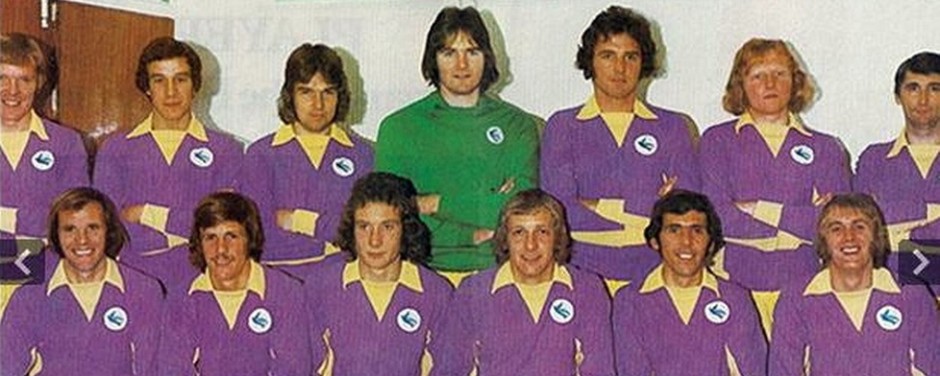
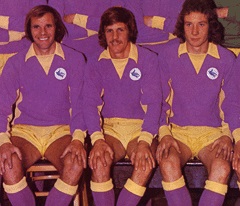
Ron Healey was a prominent member of the City side for much of the seventies and, now a former captain of the club, for whom the same could be said during the sixties, has also died.
Gareth Williams did not play as often for City as Healey did, but he just made it over the two hundred games mark during his six years involvement with the first team.
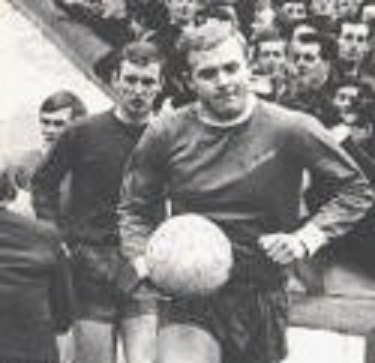
I may be wrong, but I’m pretty sure that this picture of Gareth Williams was taken as he led the team out for the match which stands out to me as the most memorable he played for the club. It was a Fourth Round FA Cup game in front of a crowd of over 37,000 at Ninian Park against Manchester City in February 1967.
On a filthy, rain sodden, day, Williams continuously drove City forward after they had fallen behind courtesy of a Graham Coldrick own goal and it was entirely fitting that it was the captain who fired home an equaliser to give his side a 1-1 draw. This was the very least City deserved on a day when the visitors were grateful to take us back to Maine Road for a reply four days later that they won 3-1.
To be honest, although I can remember Williams playing for us, I was only eleven when he left the club and so I’m not really able to do any sort of detailed analysis as to how good or important he was for us. Better that I reproduce this description of his time with us which I read just now;-
“Large, barrel chested wing half who could also play inside forward, a locally produced player who rose through the ranks to become skipper of the side for a number of years. Although he was born in London, his family moved to Blackwood when he was about 6 months old and it was in South Wales that he started playing football. Spotted by City playing for Cefn Forest in Monmouthshire football, he was signed on professional forms after a short trial. He managed to force into the first team remarkably quickly, but his career took off in a big way once Jimmy Scoular took over as manager and probably saw him very much as a player of the Scoular style. With the recovery from the slump of the mid 1960’s, he became something of a hot property and it was with some dismay among City supporters that he was sold to Bolton Wanderers for the then substantial fee of £45,000. His popularity merely transferred with him as he spent 4 seasons with a Bolton side that were themselves in decline, and made 109 League appearances for them, scoring 11 goals in the process. He moved on to Bury in October 1971 where he played 2 more seasons, making 42 League appearances, and scored 4 goals. He left the game during the close season of 1973, and took up employment in the prison service.”
Williams is reported by Wikipedia as having died on 4 June on Gran Canaria at the age of seventy six.
RIP and commiserations to his family and friends.