Seven decades of Cardiff City v Nottingham Forest matches.

The regular Championship season enters its final stretch tomorrow as Cardiff City entertain Nottingham Forest in the first of their eight remaining matches with the odds still against them being able to extend their campaign by, hopefully, three more games, but, maybe the Swansea win will act as real boost for the team over the next six weeks or so.

Anyway, here’s seven questions on tomorrow’s opponents dating back to the sixties, I’ll post the answers on here on Saturday.

60s. A wide player with an Anglicised surname, he had reason to remember an encounter with City with affection early on in his career. He started off by a river at the place of his birth, but only played six times for his first team before a transfer to what could be called a sleepy county in the middle of the decade. With an airport associated with a one time cast member of Emmerdale close by, the place he represented was making a footballing recovery from what was a rapid decline, but he left, briefly, for a team of Eulipotyphla before they reached a level where they would face City again. Next he wore stripes at something of a football outpost, before a modest playing career ended with a season at the largest city in East Anglia. Can you name him?

70s. Singular version of one time local holiday destination?

80s. Born in a city inhabited recently by funny, but barely understandable, young ladies, this defender started out at Forest and spent five years there more as a squad member than a regular starter. His next move took him to what sounded like a large thoroughfare to play for a team that were nowhere near as successful then as they are now. He couldn’t establish himself at this club though and there was a loan move to the other side of the tracks so to speak in Nottingham terms, before he returned to wearing red with a move to a team with a nickname which once meant mongrel dogs or coarse, unpleasant men, but has now come to have more of a geographical meaning. It was here that he finally found regular first team football over a period of seven years before his career was ended by injury at the age of thirty without ever having scored a goal in his career, do you know who he is?

90s. Originally something of a terror, he captained items of horse riding equipment in a FA Cup Final in his one season with them before moving to a team that is only bettered by Al Ahly of Egypt. After a decade he moved on to become a Wizard, before a final season with the team he played over three hundred league matches for. He was working for the Clash when he was given the chance to play for Forest and did so for a short while as they battled, forlornly, against the drop. There were then a couple of years with a place that, seemingly, only taught Biology, Physics and Chemistry before retirement to the “Birthplace of California” – name him.

00s. Born in the place where they make pork pies, he was compared to Michael Owen as a youngster and his first competitive football was played in south Wales, but it was Forest who won the race for his signature when he became available for a permanent move. He faced City four times in his four years in Nottingham and, considering our domination of the fixture during this century, his record against us of a win, a draw and two defeats wasn’t too bad. When he left Forest, it was to play with moderate impact in the same colours further south, before a move across country where he favoured blue. After that, his career reads like a bit of a roll call of lower league venues including two spells at a ground which could be called a sextet I suppose – when he was released at the end of last season when his second spell there ended, no one came in for him and he is currently without a club, do you know who he is?

10s. Sheepish red card victim in early Warnock game?

20s. Alternative name for a dancing Miss Piggy maybe?

Answers.

60s. David Pleat’s father changed the family surname from the Jewish name Plotz and the Nottingham born winger scored his only goal from the six league appearances he made for them against City in a 2-1 win for his team at the City Ground in February 1962. Moving to Bedfordshire (Beds) to play for Luton in 1964, Pleat played more times for them that any other team over the next three years before signing for Exeter – he retired from full time football in 1971 after a season with Peterborough.

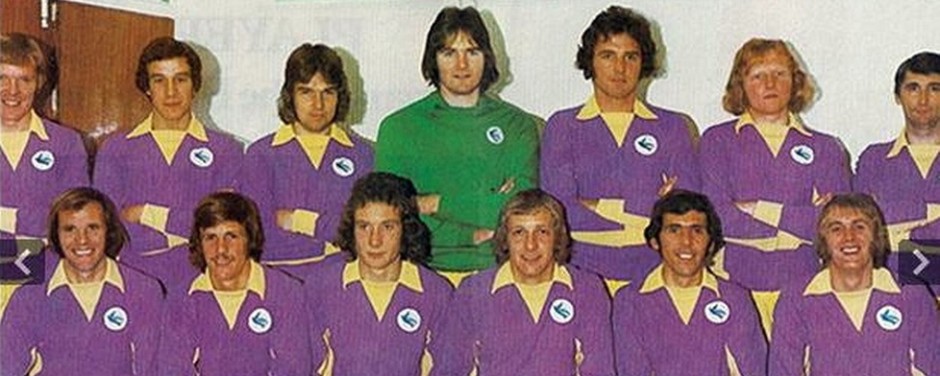
70s.Barry Butlin.

80s. Full back Gary Fleming was born in Londonderry, but he moved to Forest as a teenager and made his debut as an eighteen year in a game against Arsenal in April 1985. Fleming played seventy four league matches for Forest before leaving for Maine Road, Manchester at the end of the eighties only to move on within less than a year to the Tykes of Barnsley just after a short loan spell with Notts County. Fleming, who won thirty one caps for Northern Ireland, made more than two hundred and fifty appearances for Barnsley in all competitions before he was forced to retire with a cruciate ligament injury.

90s. Richard Gough started his career with Dundee United, then signed for Spurs for whom he tasted defeat in the 1987 FA Cup Final against Coventry. Moving on to Rangers, the club that have won the second highest number of trophies in world football, Gough had a very successful decade with them before spending a few months with Kansas City Wizards before one last season at Rangers. Gough was playing for San Jose Clash when he was loaned to Forest, but he was unable to prevent their relegation from the Premier League – his last club was Everton (known as the School of Science in the sixties) before he retired to live in San Diego.

00s. Paul Anderson signed for Liverpool from Hull as a youth and there were comparisons with Michael Owen for a while. There was plenty of interest in him when he became available on loan and it was Swansea who he signed for in 2007, With Liverpool looking to send him to a Championship club a year later, Forest got him on a year’s loan and then, when it was decided not to renew Anderson’s Anfield contract in 2009, Forest moved to bring him there permanently on a three year deal. Anderson’s next club was Bristol City and then he did better at Ipswich where fans organised a petition demanding his resigning after he had been released at the end of the 14/15 campaign. Subsequent years have justified Ipswich’s decision as spells with Mansfield, Plymouth and a couple at Northampton have seen unable to recapture the form which led to the bold predictions of more than a decade earlier.

10s. Thomas Lam was sent off in City’s 2-1 win at the City Ground in October 2016.

20s. Samba Sow.,

Posted in Memories, 1963 - 2023 | Comments Off on Seven decades of Cardiff City v Nottingham Forest matches.

For Millwall 73/74, read Wales 20/21 as James header secures priceless win.

One of the books on football that most shaped my views on the sports was “Only a Game” by Eamonn Dunphy. It’s not far short of fifty years old now and I must have been about eighteen or nineteen when I read it.

The format was not original in that Dunphy wrote a diary about how he and his side, Millwall, fared in 1973/74. It’s a sad book in a way, because a good side was in decline and were broken up by a manager Dunphy fell out with as he became a victim of the changes and his time at the club drew to a close.

What takes the book out of the ordinary for me is, just as in his later career as a television pundit, Dunphy’s searing honesty, but the part of it I want to refer to tonight was something that came as a surprise to me at the time, but nights like tonight make it easier for me to understand now.

Back in the early seventies, Millwall used to play their midweek home games on a Monday and so it was fairly common for them to play two matches at the Den in just over forty eight hours. That’s what happened quite early on in 73/74 when Dunphy and his team mates had a big 5-1 win over Hull I think it was on the Saturday and then faced Sheffield Wednesday on the Monday.

That second match saw Millwall scrap their way to a 1-0 win despite them not playing well in an encounter where they were often second best. However, in comparing the two matches, Dunphy, and, according to him, his team mates were unanimous in being almost aaadismissive of their big win, while thinking that their scrappy 1-0 triumph against a side they thought would be right up there challenging come the end of the season would kickstart a promotion bid of their own.

The fact that Sheffield Wednesday ended up fighting a relegation battle shows that the game’s professionals are hardly impeccable when it comes to passing judgement on football matters. That doesn’t alter things as far as the relevance to tonight’s Wales game against the Czech Republic is concerned though.

Millwall’s joy at their Monday night win over Wednesday, and they celebrated it that night, goes to the heart of a thought process which, correctly, judges that making a habit of winning the really tough games is more important than the occasional goal rush because they, not the 5-1s, tell you what sort of team you are and how successful you’re likely to be.

So, if a 1-0 win when you’ve been outplayed for large stretches of the ninety minutes is what really makes professional footballers happy, then Wales must be a very happy bunch tonight after a victory which, even this early in the group had a must win look to it if we were going to stay within striking distance of the Czechs.

Single goal victories are nothing new to the current Welsh team – the table topping Nations league campaign contained four of them which all followed a very similar pattern with the goal coming late on in all of them and, in my view, only in the win in Finland, was our performance close to being good.

The two wins over Bulgaria and the one over Ireland in Cardiff only really had the goals and the results to commend them from a Welsh viewpoint and, in some ways, tonight was more of the same, but, when you consider the quality of tonight’s opposition and the circumstances leading up to the the game, then this is a more impressive win and definitely one that Dunphy’s Millwall side would really have appreciated.

Let’s not forget that the situation which has Robert Page approaching six months as interim team manager is still a long way from being resolved as the investigation into assault claims against Ryan Giggs continues.

Perhaps Wales being under caretaker management may have had something to do with why three members of the squad, Hal Robson-Kanu, Tyler Roberts and Rabbi Matondo, allegedly broke squad qrules which led to them being sent back to their clubs yesterday leaving their country seriously short of depth in attacking areas tonight – apparently, the alleged offences were not Covid related.

To no one’s surprise, Joe Allen joined Aaron Ramsey, Ben Davies and David Brooks among the injured absentees and so Wales had a huge challenge going into a match against opponents who had followed up their 6-2 win in Estonia in their first game with a praiseworthy 1-1 home draw against world number ones Belgium on Saturday.

Therefore, victory for them tonight would have left the Czechs seven points above us – too big a gap to claw back surely with the return matches with the Belgians and the Czechs to come.

Right from the start, an away win looked a distinct possibility. Wales, going in with the team which lost in Belgium apart from Joe Morrell coming in for Allen, decided against including the scorer of the goal against Mexico on Saturday, Keiffer Moore, but then proceeded to play high balls against a physically imposing opposing team that would have made the Welsh approach look ill considered even if Moore had been playing.

Wales, frankly, looked like what this team was, a bunch of reserves at their clubs with the occasional German Second Division player thrown in, during a one sided first half that the confident visitors enjoyed a distinct edge in.

When it came to a goal threat, most of that came from Jakub Jankto who had a free role playing behind striker Patrik Schick (who I seem to remember was once linked with City) and he had three or four chances of varying degrees of difficulty to put his side in front. The best, and simplest, of these coming a little luckily as the ball found its way to him just to the right of the Wales goal and he took it on a bit before shooting into the side netting when he should at least have got his effort on target.

Wales, too quick to go long and, invariably, deliver possession back to the Czechs, appeared to be nonplussed by their opponent’s physicality, pressing and attacking movement and yet, the best scoring opportunity of the first period went to them. Neco Williams, as good as anyone in a Welsh shirt during the first half, did well to work the space for a cross from the left to find Gareth Bale coming in from the other wing to be faced with a volleyed chance on his left foot from about six yards out.

In the fraction of a second between me realizing who it was the ball was going to and Bale attempting his shot, I began to celebrate the opening goal, but the “yes” never came from my lips because the captain, who has not scored for his country in getting on for two years, is still waiting to break that relative drought – his shot was not hit truly and bounced into the ground and up for Tomas Vaclik to make a good, but not outstanding, save by diverting the ball over the bar.

For more than three quarters of the match, that remained the only real sight of the Czech’s goal that Wales had. If the second half was more even, it was still the visitors who possessed nearly all of the goal threat which is a pretty damning observation when you consider that for nearly all of the third quarter and around half of the fourth one, they had a one man disadvantage.

It was only a couple of minutes after the restart when Schick, frustrated by Connor Roberts’ attentions from a free kick, flicked his arm/elbow at the Swansea player on a couple of occasions – maybe the contact wasn’t as hard on Roberts as he made it look, but it was definitely there and Schick could have few complaints when Romanian referee Ovidiu Hategan showed him a red card, with Roberts also receiving a caution.

Despite this, it was still the Czech’s that pushed forward more and, in the first of a couple of examples of truly outstanding defending we saw from the home side, James Lawrence got back to legally win the ball from Lukas Provod, who had rounded Danny Ward and seemed to only have the formality of rolling the ball into the empty net left to do to put his team a goal up.

Given the way the game was going, it was quite a brave call by Rob Page to withdraw one of his back three in Chris Mepham and replace him with Moore with thirty five minutes left, but it was something that was needed for a home team, which a couple of blocked Bale volleys, which were much better struck than the easier one he had got wrong earlier, apart were staring at a goalless draw as their best possible outcome from the match.

Despite having more men on the pitch and them having played a friendly on the weekend where they had made plenty of changes, compared to their opponents for whom this was a third competitive game in six days, it was still the Czechs who were looking fitter and stronger and their desire to get the three points was apparent when they bought on another target man in Michael Krmencik to replace the dismissed Schick by withdrawing a defensive midfielder.

Finally, as we entered the last quarter of an hour, there was the odd sign that the Czechs were beginning to tire as Wales upped their attacking game somewhat – a neat short pass by Moore set up Dan James who looked like he had taken the ball around Vaclik only for the keeper to again do well to reach back and turn the winger’s shot around the post, but then any hopes of a Welsh win seemed to disappear when they also lost a player to a red card in the seventy seventh minute.

For me, it was a harsh decision from a ref who got most things right to show Roberts a second yellow card when his elbow made contact with Tomas Soucek as they contested a header, but in the modern game, such challenges are often subject to such sanctions and the wing back should maybe have been on his guard more due to a feeling that the official might be looking to even things up.

Incredibly though, having laboured all night, Wales next proceeded to do what they do these days by scoring the late goal which wins them the game!

Just four minutes had elapsed since Roberts’ red card when Bale, down near the corner flag on the Czech right, threw to Moore, who drew a couple of defenders on to him and then slipped the ball back to the captain who stepped past West Ham’s Vladimir Coufal to work himself room to cross. The problem was that with Moore having come towards him to receive the ball from the throw in, Bale did not have the preferred target for such an opportunity to aim for, but, instead, perhaps, the shortest player on the pitch in James.

The cross, when it came, was such a fine one that it was pretty clear that the ball was going to reach the Manchester United man, but it still needed a header of sufficient quality from him to beat a goalkeeper who had impressed so far and James responded superbly with a text book execution, putting the ball back where it had come from and across Vaclik into the far corner of the net. Just as Neco Williams had done to win the Bulgaria home match in added on time, someone you wouldn’t expect to be an accomplished header of the ball had put away a chance in exemplary fashion  

Faced with about a quarter of an hour to hang on to their lead, Wales switched Lawrence to left back and Ethan Ampadu (who I thought did very well in a mostly outgunned midfield) into central defence as Williams switched to the right.

With Jonny Williams on for Harry Wilson and winning his share of free kicks as he so often does for his country, Wales were fairly comfortable for the next ten or twelve minutes and Moore came close to adding a second with a side footed effort from the edge of the penalty which flew a yard or two over and wide. However, the real drama came right at the death when Joe Rodon performed a magnificent block which sealed the win when he diverted a well struck, close range effort by Ondrej Celustka, which looked like a certain goal when the ball left his foot, over the bar.

The Czechs could, justifiably, claim that they were worth a draw at least, but this was a fine win in its way by Wales who will, hopefully, have at least some of their walking wounded back for the return game in the autumn because I don’t think the gap between the two sides is as big as it looked last night. However, even without, arguably, three of their most effective international performers, there is now a depth in squad strength and quality to Wales which means that, with their excellent goals against record, they are always in games even when they’re struggling to create much.

Although they are, realistically, looking at a second placed finish at best in this group (Belgium beat Belarus 8-0 last night), Wales already have the Play Off place that a runners up finish would grant them following their topping of their Nations League group, but it would be good to have the momentum of what would be more success behind them going into those games to decide if they make it to Qatar and I wouldn’t bet against them pulling it off.

Posted in Out on the pitch, Wales | Tagged | 2 Comments