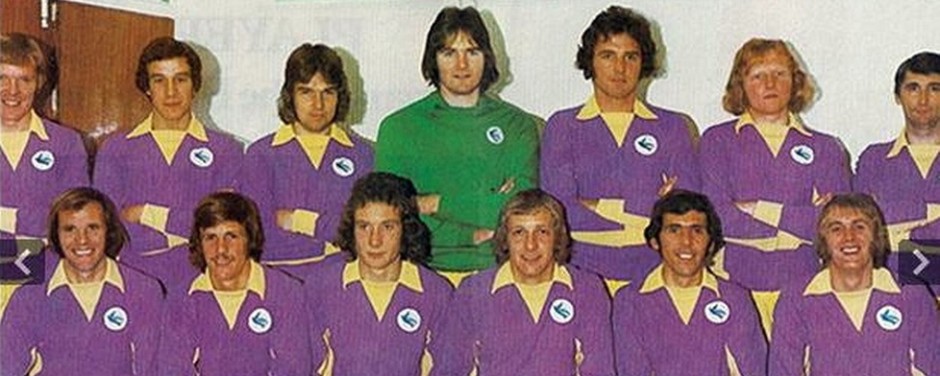
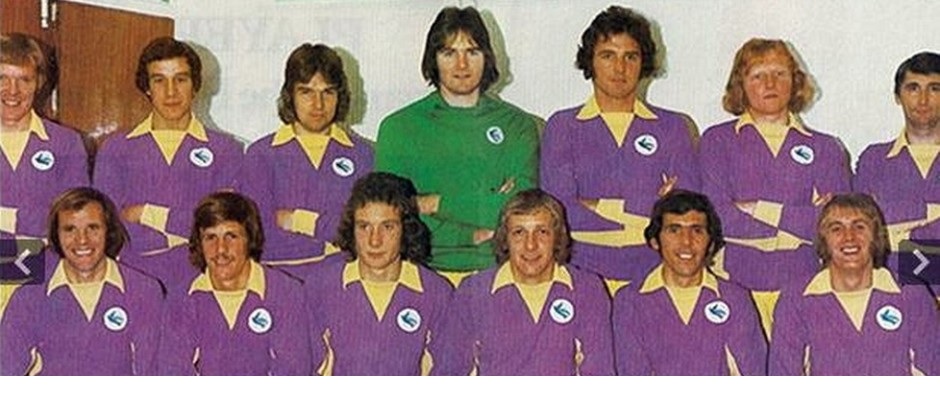
Seven decades of Cardiff City v Preston North End matches.

it’s club football all of the way until Wales’ Play Off game with Finland, and, hopefully, a Final against Poland or Estonia, in late March now and City make what is a regular trip to Preston tomorrow hoping to put their poor showing against Norwich, where a 2-1 lead beyond the eightieth minute was turned into a 3-2 defeat, behind them.

The good news is that Erol Bulut confirmed in his media conference yesterday that Manolis Siopis should be available after injury kept him out of Greece’s two games over the past week and Perry Ng will be returning after missing the Norwich match.

The club website coverage of the press conference showed pictures of Aaron Ramsey and Callum O’Dowda running around a training pitch and our manager said he was hopeful that both of them will be available for selection before the turn of the year.

Meanwhile, here’s the normal quiz on our upcoming opponents with the answers to be posted on here on Sunday.

60s. Born on a Christmas Eve during the Second World War, this winger started off at Preston and made close to two hundred league appearances for them over seven years before moving to a team that were one of the giants of the game then, and still are now. The step up did not work out for him as he made just a single league appearance for his new club before a return to Preston for seven more years was completed. Loan moves to two lower division sides with yellow/amber in their kit followed before the end of his time at Deepdale with a short lived move to a club that faced Manchester United in European competition at a time when they were defending Champions. His final club were Shropshire non leaguers, but who is he?

70s. A Preston team beaten by City during this decade featured three players who finished their careers with European Cup winners medals, name them and the game in which they faced us.

80s. A defender who won one of his seven international caps in a World Cup Finals tournament, he had long since ended his days of representing his country when he signed for northern birds after a decade representing a capital club. Signing for Preston just as the seventies were ending, he spent two years with them before a move to a learned team and then a short return to his first club to finish, can you name the player I’m describing?

90s. Was the Davis money spent getting this forward in as a replacement ? (5.5)

00s. Steal from a Prince’s property?

10s. Who is the Preston player (he’s not a defender) from this decade who has picked up getting on for twenty yellow cards for every goal he scores over a long career?

20s. What is the relevance of the Rebel Army from Turner’s Cross to the current Preston squad?

Answers

60s. David Wilson moved from Preston to Liverpool in 1967 only to return to Deepdale later that year. Following loan moves to Bradford City and Southport, Wilson crossed the Irish Sea to play for Waterford, the team who were Irish Champions when they faced defending European Cup Winners Manchester United in that competition in 1968/69. Wilson finished his career at Telford United in 1974.

70s.David Sadler (with Manchester United in 67/68) and Mark Lawrenson and Michael Robinson (with Liverpool in 83/84) were all European Cup winners who were in the Preston team beaten 1-0 at Ninian Park in April 1976.

80s. John Blackley played for Scotland against Zaire in the 1974 World Cup while a Hibs player and signed for Newcastle in 1977. He next spent two years with Preston until 1981, before a couple of seasons with Hamilton Academicals and a return to Hibs for the 83/84 campaign.

90s.Simon Davey.

00s. Rob Edwards.

10s. Soccerbase shows that Ben Pearson has scored five goals and been booked ninety seven times since making his debut in 2014 (plus five red cards).

20s. The Rebel Army and Turner’s Cross are the nickname and ground respectively of Cork City, the side Preston signed their captain Allan Browne from in 2014.


Posted in Memories, 1963 - 2023 | Tagged | Comments Off on Seven decades of Cardiff City v Preston North End matches.

Highly dubious penalty decisions count for nothing as Wales have to settle for the Play Offs.

It’s just as well Croatia rendered the outcome of tonight’s Wales v Turkey game at Cardiff City useless by beating Armenia 1-0 in Zagreb to ensure their qualification for the 2024  Euros because if they hadn’t managed that single goal, Turkey 2023, could have been added to Scotland at Anfield 1977 and Ninian Park 1985 and Romania at the National Stadium in 1993 as occasions where penalty kicks have haunted Wales on nights when qualifications for the latter stages of major tournaments were on offer.

If it were not for Ante Budimir’s forty third minute goal which gave the Croats the win they needed, Matej Jug of Slovenia would have joined Robert Wurtz of France, whose absolute howler of a decision when he awarded Scotland a penalty after their striker Joe Jordan punched a long throw in into the Welsh area, and Dutchman Dan Keizer who awarded the Scots another well dodgy penalty after what was a clear case of ball to hand, in a refereeing Hall of Shame of officials who had thwarted Wales with their ineptitude.

Therefore, I’ll try not to take up too much time running down Mr Jug, but it’s hard not to be critical of someone who, in the first half, showed a marked reluctance to point to the penalty spot in favour of Wales but, in the second half, seemed only too willing to do so in Turkey’s favour.

Wales had three shouts for a penalty, two of them involving Brennan Johnson. I was critical of Johnson for his anonymous showing in Armenia on Saturday, but he was much better here and was one of the stars of a dominant first forty minutes or so from Wales which, at times, matched the intensity and quality which proved too much for Croatia last month.

The first penalty claim involved Harry Wilson, but the first of the pair of possible fouls on Johnson was the stronger shout for me. The Spurs striker was caught by a needless tackle by Samat Akaydin close to the bye line and it fell into the I’ve seen them given category, but the Turkish defender did make contact with the ball and so I could just about see why no penalty was given.

However, when Akaydin came through the back of Johnson a few minutes later with an even more rash challenge, it seemed a stonewall penalty and I can only assume the referee’s view was blocked, because there’s no other reason I can think of why he decided not to point to the spot.

Wales were 1-0 up at the time of all three incidents and they needed the security of a second goal while a rattled looking and undisciplined Turkish side were very much second best.

Eventually, Turkey were able to start playing the sort of football that won the group for them, as well as a 3-2 triumph in Germany on Friday, and the five minutes leading to half time saw them pushing Wales back for the first time.

The second half saw the visitors continue their improvement as Wales could not recapture the fervour, urgency and no little quality that had carried them through the opening stages of the game. Turkey were the more likely goalscorers through the second period , but they still needed considerable help from Mr Jug to come up with an equaliser as, like so many of their longer passes into the Welsh box, an over hit ball was on its way through to Danny Ward. There was no chance of Kenan Yildiz reaching it, but he went down under the slightest of touches from Ben Davies and a penalty was given.

Turkey’s improvement could be more or less traced back to the moment that Yusuf Yaziki was introduced as a first half tactical substitute and it was he who calmly sent Ward the wrong way to level things up.

Spectators and viewers could be forgiven for thinking VAR was not being used on the night, but the various errors were compounded by the fact that it was available, but the officials in charge of it decided to sit on their hands all through the game. While it’s arguable whether VAR would have intervened in the penalty Turkey were given because it involved a decision to award one because of a harsh interpretation of the laws by the referee, the second foul (it was undoubtedly a foul) on Johnson was the sort of case VAR was brought into being for – it was so obviously a clear error by the on pitch official.

Wales’ goal had arrived as early as the seventh minute when Harry Wilson’s good pass found Neco Williams who drove in from the left to steer a calm and accurate right foot shot from twenty yards well beyond keeper Cakir (who had to go off injured after thirty five minutes) and into the corner of the net.

Wales spent the next half an hour or so well on top, but there wasn’t really that much goalmouth action to show for it and it was more the regular penalty shouts that were a measure of the home side’s superiority.

Indeed, Wales probably came closer to scoring again in two second half incidents which, first, saw Johnson’s fine angled shot turned aside by replacement keeper Bayindir and, second, the same player’s late goal ruled out by a close, but correct, offside decision.

Wales now go into the Play Offs in March where they’ll be home to one of Iceland, Finland or Ukraine with a final then against Poland or Estonian five days later if they win with the venue to be decided in a draw in Switzerland on Thursday. I’d give us a decent chance of beating Iceland or Finland, but I’m not so sure about Ukraine after we used up more than our fair share of luck in beating them in the game which secured World Cup qualification. Poland are not the team they were, but would fancy their chances against us home and away, while Estonia have shown that they are hardly minnows when we’ve played them in the past, but a failure to beat them with a place in the Finals at stake would, surely, see the end of Robert Page’s time as manager of his country..

At age group levels, Wales under 21s played better in losing to group number one seeds Denmark at Rodney Parade on Monday than they did in beating Iceland at the same venue a few days earlier.

Maybe another draw between the teams to match their opening fixture in the group would have been a just outcome, but the Danes scored in the first five and last five minutes to win before Cian Ashford, on as a sub, replied for Wales with the last kick of the game after the Danish keeper had done well to keep out Rubin Colwill’s free kick. Colwill was only a sub and he was introduced as one of three half time changes by Matthew Jones that saw Eli King being one of those withdrawn.

At under 17 level, Welsh qualification for the next stage of the latest Euros was secured by a 4-0 win over Gibraltar at Leckwith earlier today. From City’s dominance of the under 17 squad which competed in the Finals earlier this year, they only have two squad members this time around for the current qualification process – Jac Thomas and Ronan Kpakio.

Posted in Wales | Tagged , , | 6 Comments