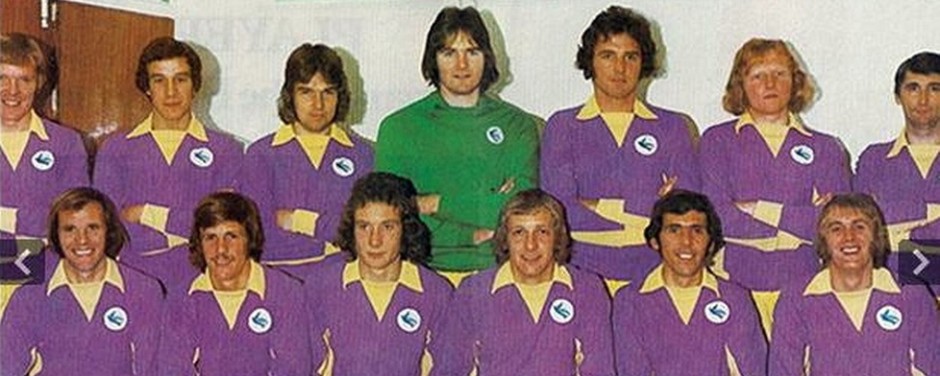
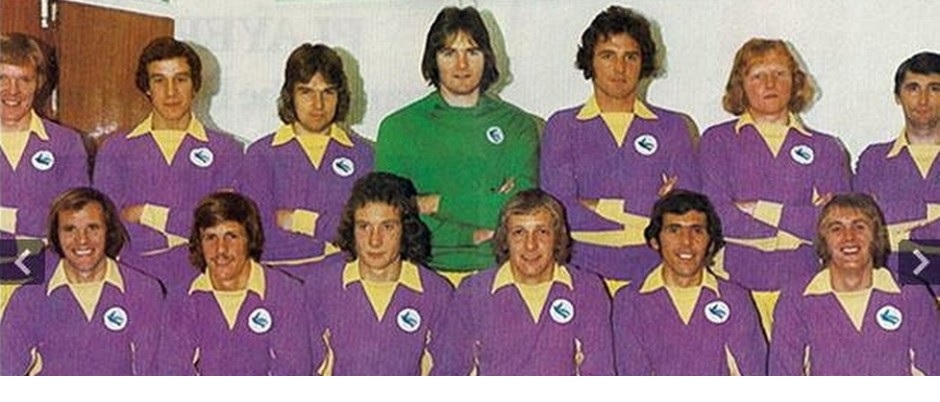
Seven decades of Cardiff City v Southampton matches.

A very tough week which features three games against sides who were in the top six this time last week ends tomorrow with a trip to Southampton to take on one of the teams which are rated as virtual certainties for the Play Offs I’d say with a top two finish for them not out of the question.

Southampton had a very poor September, but, since then, have settled down to proceed in an unspectacular way up the table, but the defensive generosity which was costing them in their first seven or eight matches seems to be a thing of the past now.

Looking at the flaws exposed in our last two home games and the lack of creativity which appears to be becoming more of an issue lately, it seems to me that our set piece game will need to be spot on for us to get anything out of the game tomorrow, although the fact that we’ve won on our last two two visits to St. Mary’s offers us some hope.

Here’s the usual seven questions on forthcoming opponents dating back to the 60s and I’ll post the answers on here on Sunday.

60s. This forward had reason to be both happy and very disappointed after one of his encounters against City while playing for Southampton. There’s no doubt that the Saints saw the best of him because, away from the Dell, his record was pretty modest, whereas when he was with Southampton, you look at his record and wonder why he never won an international cap. Starting off with a stripy team which I suppose you could call even handed or on the level, he earned a move to beautiful birds that soon became a lot plainer – this move did not go well and Southampton signed him as a new decade began. For seven years, our man gave the club great service, but, he was not to enjoy the celebrations which were to come because his starting place had come under threat as he approached thirty and he eventually moved to London wanderers who had now settled down. Once again, he wasn’t as prolific away from Southampton and his stay was a short one before a brief stop off at barracks and then retirement at thirty three. Who am I describing?

70s. Although his name may have suggested otherwise, this defender was from the south east. He started off with his home town club as an old style wing half, but never played a game for them and ended up following the man who was his manager with the Canaries to a steel town to the north where he made his league bow, but could not prevent his new side being relegated. Nevertheless, his form was good enough to impress a team with a unique name from a couple of levels higher – this move saw him switch into central defence and he was soon winning Player of the Year awards in a team that would end up playing in the First Division. When relegation came, it was time for him to sign for Southampton and, although he was a part of another relegation team, he also had his share of success there over the next four years. Following a short loan spell back at his second club, he became something of a globe trotter, although there were three years of wearing blue in the capital and a stint playing non league football in Hampshire before retirement at the age of thirty eight, can you name the player?

80s. Nut starter and then an assortment of fried ones gets you a veteran full back! (6,4)

90s. Locally produced red meat possibly.

00s. Decline of a doubter maybe.

10s. Which member of the last Southampton side to face City is now playing for the black and whites in a stadium which bears the name of a very early European Cup hero?

20s. Who or what is the link between former City players John Toshack, Bobby Brown and Steve McPhail and someone who is pretty certain to be in the Southampton team tomorrow?

Answers

60s. Scotsman George O’Brien scored a hat trick for Southampton at the Dell in October 1962, yet ended up on the losing side as City emerged 5-3 winners. He started his career with the Pars of Dunfermline before securing a move to Leeds. Wikipedia lists O’Brien as an inside forward and his scoring rate at his first two clubs confirmed that was his right position, but one hundred and fifty four league goals in two hundred and forty four games in his seven years with the Saints strongly suggests otherwise. Short spells with Leyton Orient and Aldershot followed O’Brien’s departure from Southampton in 1966.

70s. Norwich born Mel Blyth played his first league football under his former Norwich manager Alan Ashman at Scunthorpe United and was transferred to Crystal Palace in 1968. Blyth was at Palace for six years before joining Southampton where he was a member of their 1976 FA Cup winning team. Following a loan spell back at Palace, Blyth played in South Africa, America and Hong Kong as well as at Millwall and Andover.

80s. Dennis Rofe.

90s. Barry Venison

00s. Wayne Thomas.

10s. Yan Valery was in the Southampton side beaten 2-1 by City in the Premier League in February 2019, he now plays for French team Angers who are nicknamed the black and whites and play their home games in the Stade de Raymond Kopa – Kopa was a member of the Real Madrid team which dominated the European Cup in its early years.

20s. Shamrock Rovers. They were Southampton goalkeeper Gavin Bazunu’s first club, Steve McPhail is the club’s Sporting Director and John Toshack and Bobby Brown scored the goals which enabled City to beat them 2-0 on aggregate in our run to the Semi Finals of the European Cup Winners’ Cup in 1967/68.


Posted in Memories, 1963 - 2023 | Tagged | Comments Off on Seven decades of Cardiff City v Southampton matches.

A very modern football match or as old as the hills?

“Transistion” is one of those buzzwords/phrases that we hear so much of in modern day football, but it, along with other ones I’m thinking of, offer nothing new. For example, when sides are said to be “compact”, all it means is that they are packing their defence and keeping their shape.

When I first started taking an interest in the game about sixty years ago, Italian teams especially tended to play in a very “compact” fashion in away European club games (and quite a few home ones as well) and, as the sixties went on, their approach started to be copied by sides from other countries.

Similarly, “playing between the lines” seems much the same to me as doing what I used to see Paul Brayson and Jason Bowen do in fourth tier City teams around twenty five years ago, except then it was called playing in the hole.

In fact, if you’re old enough to remember the 2-3-5 days which were prevalent for close to a century before the system faded out as the sixties went on, it seems to me that old style inside forwards and, to a lesser extent, wing halves played “between the lines”. Indeed it’s interesting to see players now being  not just number tens, but number sixes and eights as well. This is a throwback to more than half a century ago when the player wearing six was a (left) wing half and eight was a (right) inside forward – from what I can gather, although the modern use of the terms number six or eight has no relevance to the side of the pitch the player is operating on, the six is an old style wing half and the eight an inside forward.

When it comes to “transition”, unless I missing something, all it means is to counter attack (a concept that has been around for as long as the game has been played I would have thought) and, in tonight’s game between Cardiff City and West Bromwich Albion at Cardiff City Stadium, we had two teams that existed to counter attack.

So, what we got was something akin to a chess match with two teams trying to draw each other out to over commit to attack, so that gaps would appear which could be exploited in “transition”. For a time, this appealed to the football purist/snob in me, but, after a while, it just became boring and, of course, the fact that West Brom were slightly better at it than us and that they were a slightly better team than us didn’t help matters – by the end there could be no doubt that they were worth their 1-0 win.

With this second successive home defeat, City are in danger of slipping back into their bad old ways at Cardiff City Stadium and it seems to me that, having fared much better without him than I feared we would, the return of Aaron Ramsey can’t come soon enough now.

West Brom were, for me, easily the best team to visit our ground this season, but this isn’t as big a compliment as it might sound when you look at the league positions of the teams we’ve played at home before today.

To be fair to City, they were missing their first choice left hand side so to speak with Jamilu Collins serving his one match ban for five bookings and Karlan Grant unable to play as part of his season long loan arrangement with West Brom and there was also the disruption this caused to the rest of the team as Perry Ng switched sides from right back, Mahlon Romeo came in on the right and Ollie Tanner started on his wrong side on the left.

Romeo had struggled in the last home game against Norwich with much of the danger from the visitors coming from their left hand side and he only lasted fifty five minutes tonight as Ng went back to the right and Jonathan Panzo came on to play, not too convincingly, at left back where he was given a tough time by Albion substitute Tom Fellows a young right winger who was refreshingly direct and incisive in a way that our young right winger, playing on the left, wasn’t.

Ollie Tanner had “one of those games” tonight, little went right for him and I was surprised he survived until the seventy fifth minute. However, for most of the time, he’s impressed me with his attitude and his willingness to do the out of possession stuff demanded by his manager, but is there now a danger that he is becoming almost regimented in such thinking?

We didn’t sign Tanner because of his work when Lewes didn’t have the ball, we signed him because of the exciting things he could do when he had it. By the same token, it was Tanner’s goals and attacking skills that impressed Erol Bulut enough in pre season to turn him from someone not good enough for the York City team last season into a regular in our first team squad this time around. I’m not saying Tanner should not have defensive responsibilities, but I thought it looked tonight as if he is shackled by them – I’d like to see him being encouraged to express himself more as he struggles to be the player his manager wants him to be.

There’s not much to say about the game, because not a great deal happened. Even very early in the match both sides played at a walking pace at times as they waited for the other to commit themselves, but one incident provided a perfect example of how these two sides operate.

City have been able to mask a lack of creativity without Ramsey with their rediscovered attacking set piece game (before tonight they were the highest scoring team from set pieces in the top two divisions on eleven with the next best on eight) and the closest we came to a first half goal was from a City corner.

However, this was because Joe Ralls’ delivery was probably his worst of the season and when Callum Robinson lost possession on the edge of the penalty area, City were looking at a counter attack where they were outnumbered four to two. It all ended with Jeremy Sarmiento rolling a shot which travelled ever so slowly to hit the post with sub Brandon Thomas-Asante unable to turn the rebound home.

Sarmiento, on loan at West Brom from Brighton had the last laugh though with a viscous twenty five yarder on fifty minutes from out on the left which flew past a startled Alex Runnarson and into the corner of the net with my first reaction being that the keeper, who again kept Jak Alnwick out, might have done better with it. I’ve only seen the goal once as I write this, so I’m not sure if I’m being harsh on Runnarson there or not, but, rather like it did towards the end of last season with Ryan Allsop, you start to question almost every goal a keeper concedes once a seed of doubt about them has been planted.

For all that West Brom deserved their win, Sarmiento’s fine effort was their only one on target all game – Thomas Asante had a header he should have done better with, but there was honestly very little from the visitors to suggest another goal.

There was even less to warrant a goal from City though, Josh Bowler had our one on target effort around the half an hour mark when he worked his way between three defenders and drew what had to be the save of the game (I can’t think of a goalkeeper saving a shot besides this one mind!) from Alex Palmer in the Albion goal.

It was a piece of individual skill which got us our best chance then and for all of City’s honest endeavour, it’s hard to think of much else they did in an attacking sense – Bowler was not too far over with a well struck second half volley, Kion Etete, on for Tanner, made a mess of what was a hard headed chance from a good cross from another sub, Rubin Colwill and the Canton Stand got worked up about a possible penalty for handball against Kyle Bartley – that was it though in a game which was eerily reminiscent of all of those 1-0 home defeats we suffered in the past two seasons.

Posted in Out on the pitch | Tagged | 11 Comments